
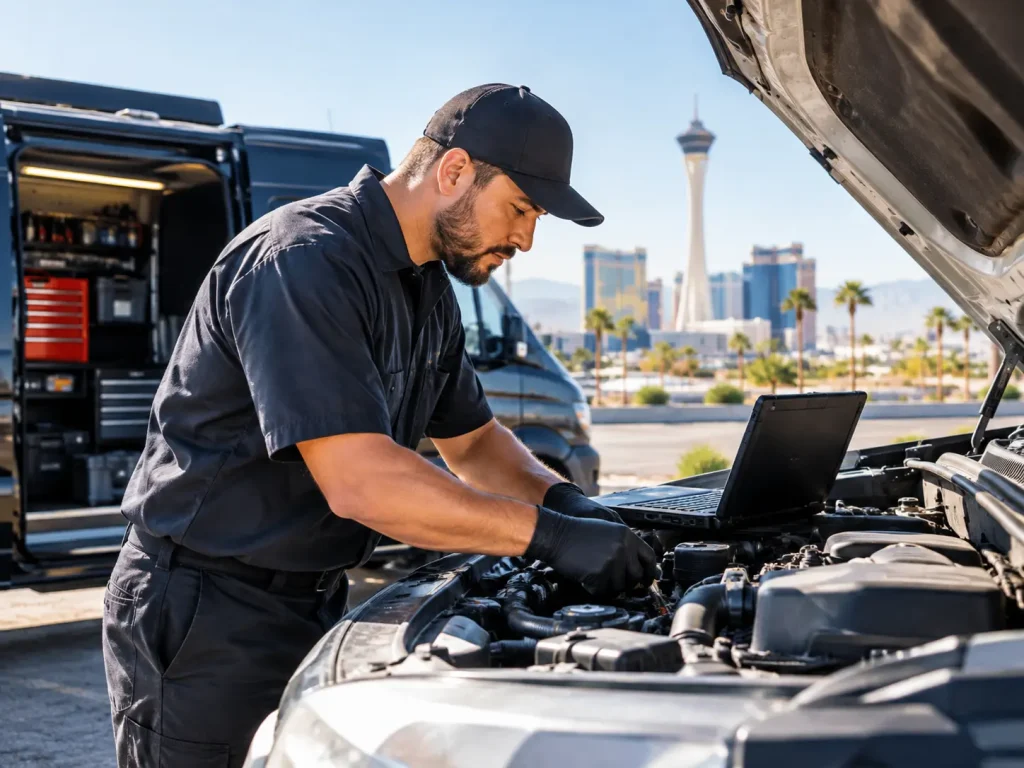
You are driving along, everything seems normal, and then a small battery shaped light appears on the dashboard. It is easy to assume the battery is dead, but the truth is a little different, and understanding it can save you from a stalled car, a missed appointment, or an unnecessary repair. This guide explains what the battery warning light really signals, the most common causes, what to do when it comes on, and how to handle it if you are dealing with a battery light in Memphis. It also covers alternator problems, what a technician checks, and how a mobile mechanic can help at your home or workplace.
What Does the Battery Light Actually Mean?
The battery light is better described as a charging system warning. It does not simply tell you the battery is old or weak. It tells you the car’s electrical charging system is not working the way it should. In a healthy system, the alternator produces electricity while the engine runs, powers the car’s electrical needs, and keeps the battery charged. The battery mainly supplies power to start the engine and helps smooth out the electrical system. When the charging system stops doing its job, the car begins to rely on stored battery power, and that supply does not last long. If the problem is not addressed, the battery drains, the engine can stall, and the car may not restart.
On many vehicles, the light comes on when the voltage in the system falls outside the expected range. Some cars show a message instead of an icon, and some cars use a different symbol, so your owner’s manual is the best guide to what your particular warning means.
Common Reasons the Battery Light Comes On
- A failing alternator that no longer produces enough power
- A worn, loose, or broken serpentine belt that drives the alternator
- Loose, corroded, or damaged battery cables and terminals
- A battery that is old or unable to hold a charge
- A faulty voltage regulator, which controls how much power the alternator sends out
- Damaged wiring, bad grounds, or a blown fuse in the charging circuit
- A failing belt tensioner or pulley
- Heavy electrical loads that exceed what a weak system can supply
Because several different parts can trigger the same light, a proper test is the only reliable way to know which one is the cause.
The Alternator: The Most Common Culprit
The alternator is a small generator driven by the engine through a belt. Inside are bearings, diodes, a regulator, and coils of wire, and any of them can wear out. Alternators are built to last, but they work hard, and heat, vibration, dirt, and age all take a toll. Common signs of alternator trouble include:
- The battery or charging light staying on or flickering
- Headlights and dashboard lights that dim or pulse, especially at idle
- A whining, grinding, or growling noise from the front of the engine
- A burning smell, such as hot wiring or an overheated belt
- Electrical accessories, such as windows, the radio, or seat controls, working slowly or acting strangely
- Trouble starting the car, or a car that dies while driving
- A battery that keeps going flat even after a recharge or replacement
If you notice more than one of these, the alternator is a strong suspect, though a technician should confirm it with a test before any parts are replaced.
Could It Just Be the Belt?
Yes. In many vehicles, a single serpentine belt turns the alternator, the water pump, the power steering pump, and sometimes the air conditioning compressor. A belt that is cracked, glazed, stretched, or loose can slip and fail to spin the alternator properly, which triggers the light. A belt that breaks entirely is more serious, because the alternator stops charging and other systems may stop working too. If the battery light comes on together with a rising temperature gauge, a heavy steering wheel, or a squealing noise, pull over safely and turn the engine off, since the belt may have failed.
What About the Battery Itself?
A battery can cause trouble too. An old or weak battery may not hold a charge, which puts extra strain on the alternator, and a battery with internal damage can confuse the charging system. Corroded or loose terminals can also stop the battery and alternator from working together, even when both parts are healthy. A technician can test the battery’s condition and the charging output separately, which helps avoid replacing the wrong part. If your car is slow to crank or will not start at all, our guide to the top 10 reasons your car won’t start and how to get back on the road goes through the common causes in more detail.
What to Do When the Battery Light Comes On
- Stay calm and note whether the light is steady or flickering
- Check for other warning lights, such as a temperature or oil pressure warning
- Turn off nonessential electrical items, such as the radio, seat heaters, and extra chargers, to save power
- Avoid shutting the engine off until you are somewhere safe, since the car may not restart
- Head to a safe location, such as a parking lot or a trusted shop, as soon as it is reasonable, and do not plan a long trip
- Pull over right away and turn off the engine if you see steam, smell burning, lose power steering, or the temperature gauge rises
- Call for help if the car begins to stall, the lights dim sharply, or the dashboard goes dark
The amount of driving time you have left depends on the vehicle and the condition of the battery, and it can be short, so it is wise to treat the light as a reason to act soon and not as something to put off. Your owner’s manual explains how your specific vehicle reports charging problems.
Why Memphis Weather Matters
Heat and humidity are hard on charging systems. High temperatures speed up wear on batteries, belts, wiring, and alternators, and humid air encourages corrosion on terminals and connectors. Long highway drives and stop and go traffic add more heat and electrical demand. Our article on humidity, heat, and highways and car maintenance in Memphis explains how local conditions wear on your vehicle, and the battery and alternator are among the first parts to feel it. Regular checks, especially before the hottest months, help catch weak parts before they leave you stranded.
How Is a Charging System Problem Diagnosed?
A technician will usually follow a clear sequence:
- Ask when the light came on and what else you noticed
- Inspect the battery, cables, and terminals for corrosion, damage, or looseness
- Check the serpentine belt for wear, cracks, and proper tension
- Test the battery’s health and its ability to hold a charge
- Measure the voltage the alternator produces while the engine runs
- Check the wiring, fuses, and grounds in the charging circuit
- Listen for noise from the alternator bearings and pulleys
- Scan for stored trouble codes that relate to the charging system
This process separates a simple fix, like a loose cable, from a part that needs replacing. It also helps avoid the common mistake of replacing a good battery when the alternator is really at fault, or the other way around.
What Does Repair Usually Involve?
The right repair depends on what the tests show. It might be as simple as cleaning and tightening battery terminals, or it might call for a new belt, a new tensioner, a replacement alternator, or a new battery. If a bad alternator has been draining the battery for a while, the battery may be damaged and need replacing as well. Fixing the cause matters more than treating the symptom, because a new battery on a failing charging system will soon go flat again.
Can I Keep Driving With the Light On?
It is not a good idea to keep driving for long. The car is running on stored power, and once it runs out, the engine can stall, sometimes without much warning, and the loss of power steering and brake assist can make it harder to control. A stall in traffic or on a highway is a real safety risk. If the light comes on, get the car to a safe place and have it checked as soon as you can. If you are far from help, or the car is showing other warning signs, calling for assistance is the safer choice.
Can I Fix the Battery Light Myself?
Some drivers can check simple things, such as whether the battery terminals are loose or covered in crust, or whether the belt looks cracked. Beyond that, charging system work involves electrical components and sometimes a battery that can release gas or spark, so it is best handled with care. Follow your owner’s manual and safety instructions if you decide to look yourself, and do not remove battery cables while the engine is running. If you are not sure, leave it to a technician.
Can a Mobile Mechanic Handle Battery Light Problems?
In many cases, yes. A mobile mechanic can come to your home or workplace in the Memphis area, test the battery and the charging system, inspect the belt and the connections, and replace common parts such as a battery, a belt, or an alternator on site. That saves you from driving a car with a charging problem and from arranging a tow. Some jobs, such as an alternator that is hard to reach on certain engines or wiring repairs that need extended time and equipment, may need a full shop, and a trustworthy technician will tell you honestly when that is the case. When you book, share your vehicle’s year, make, model, and mileage, and describe what you have noticed, including when the light came on and any other symptoms.
Habits That Help Prevent Charging Problems
- Have the battery tested regularly, especially once it is a few years old
- Keep terminals clean and cables tight
- Replace the serpentine belt according to your owner’s manual or when it shows wear
- Pay attention to dimming lights, slow cranking, and new noises from the engine
- Avoid using the battery to power many accessories while the engine is off
- Do not wait if the light flickers, since an intermittent problem is still a problem
Do Not Ignore the Light
A battery light is a clear message that the charging system needs attention, and the sooner you act, the more options you have. A quick test can show whether the fix is small or whether a part needs replacing. If your battery light has come on, even briefly, it is worth having it checked.
To learn more about our services, visit our homepage. If your battery light is on, reach out through our contact us page and we will come to you anywhere in the Memphis area.